
A Chinese School Without Leniency
2025-07-30
Bartłomiej Magierowski
When a Polish student comes home from school and basically has nothing to do, his or her Chinese counterpart (despite the significant time difference) is still doing homework. It was the end of June 2024, around 10 p.m., when 12-year-old Lele Yan sat down to complete his assignments. The city of Shenzhen, where he lives, is famous for its excellent schools. In fact, these are not simply schools — they are large educational complexes with sports fields, running tracks, modern buildings, and sometimes swimming pools and badminton courts. All parents know that education is the foundation of a better life in metropolises such as Shenzhen, Guangzhou, or Shanghai. There is enormous competition and a very demanding education system in which only the best students succeed.
Poland without homework
Let us return for a moment to Polish realities — Prime Minister Donald Tusk promised to abolish homework, and this promise is actually being fulfilled. During a parents' council meeting at a primary school in Wrocław, I learned from the school principal that this is not simply the removal of homework, but actually a ban on assigning work to be done at home. If someone wanted to give students additional tasks, it could potentially lead to problems for the school, the education authorities might be informed, and there could be unpleasant consequences.
Some parents explain that instead of traditional homework, which must physically be completed in notebooks, exercise books, or on paper, children can be given verbal tasks, for example: "Ask your parents what the signs of spring are," or "Think about how ice is created." During the parents' meeting, the teacher of a third-grade class said that she obviously gives children such questions, but the next day it turns out that most of them simply ignored them.
It is a little like if I worked in a warehouse and my boss, instead of ordering me to unload a pallet, said: "Bartek, think about how we could unload this pallet." The next day he might ask: "Bartek, did you think about it yesterday?" — while the pallet would still be standing exactly where it was, with all the goods still on it.
Of course, opinions about homework are divided, and some parents are happy that there are no assignments. This probably applies most to two groups: talented children who will simply develop their passions, such as music, building robots, foreign languages, or sports, but also weaker students. These weaker students will receive grades of one and two in class for their daily work, quizzes, and tests, but at least they will no longer be graded for homework.
Nevertheless, most parents, including the school principal, come to the conclusion that in this way children do not reinforce their knowledge, do not learn responsibility, and do not develop a sense of duty. What is more, some children complain about having too many tests and quizzes, because this is now the only way to verify their knowledge and give them grades.
China — education has always been important here
In China, education plays a very important role, and students work hard both in the classroom and at home after school. There are no special exceptions, and it even happens that parents of a child starting primary school remove all toys and games from the child's room. They have to make space for books, notebooks, and educational materials.
Mrs. Li attended schools in the 1980s and 1990s in Hunan Province. The rural school during that period was somewhat poor and even amusing in some ways. It was amusing because classes were combined, and young Li attended the same class as her brother, who was two years older. He was not repeating a grade — the school simply created a group of children from the same village.
Some children had books, others had nothing. Some families could not even afford clean notebooks. Just like anywhere else in the world, the class included hardworking students, average students, and troublemakers.
Fortunately, Li belonged to the ambitious group and knew that only education could change her difficult life. Her parents were farmers. Every morning they sold vegetables, and the family's daily income in the 1980s was only 10–20 yuan (approximately 5–10 PLN).
Thanks to her studies and determination, she managed to complete primary school, middle school, and high school. In high school she became fascinated with Western culture and read books in English by Dumas, Dickens, Austen, and many other writers. She even received a scholarship in the form of a tuition fee exemption.
Her English teacher in high school noticed her talent and dedication. Mrs. Su even lent her money so that she could continue her education and attend university. Her parents simply could not afford it. In this way, Mrs. Li obtained her bachelor's degree, specializing in English language education.
She could have become a teacher, but she decided to look for opportunities in Shenzhen — at that time, between 2000 and 2005, a rapidly developing metropolis that was intended to become a competitor to Hong Kong. It was there that many young, educated people began their business careers.
It was precisely there, at the beginning of the 21st century, that Li's life and the lives of her entire family finally changed. Thanks to better earnings and a better job, she was also able to help her parents and brother. With her daughter's support, her parents were able to pay into a pension fund — a one-time payment of 3,000 yuan provided them with a monthly pension.
Near the city of Yueyang, in the village where they had farmed their land, they are now treated as pioneers who adapted this area for agriculture. Because of this, the government treats them in a privileged way.
In 2023, Li, already an adult woman, re-established contact with the teacher who had helped pay for her studies. As a gesture of gratitude, she bought her a beautiful gold necklace.
Can a teacher be wealthy?
The end of the 20th century was a difficult period for Chinese education. Rural schools were extremely poor, sometimes lacking even basic furniture and desks. Children used second-hand books, and there was a shortage of notebooks and writing materials. There was no question of laboratories with experiments, computer classes, or modern technologies. Some provinces even relied on support from foreign foundations.
A few decades passed, and China developed rapidly. The education system also changed. More and more money was allocated to schools and teachers' salaries. Small rural schools were closed and replaced by larger, modern facilities, with children transported there by school buses — buses inspired by the famous yellow American school buses.
Importantly, the teaching profession, both in the past and today, enjoys great respect and social recognition. Teachers receive many benefits, and in recent years, due to strong social pressure, many parents have started sending their children to private tutoring and additional courses.
As a result, teachers, especially in large and medium-sized cities, have become quite wealthy. Before the Covid pandemic, in the city of Shaoxing (Zhejiang Province), the best clients of Mr. Wu were precisely teachers.
What services does Mr. Wu provide? He specializes in luxury apartment finishing — designs, materials, and original solutions. Marble floors, suspended ceilings, illuminated walls, large bathrooms, rain showers, and wardrobes with built-in storage spaces — these are exactly the wishes of many clients who work every day as teachers.
One of them even told Mr. Wu that within three years he had earned around 600,000 RMB from private tutoring (approximately 300,000 PLN). Others do even better because they establish private educational centers where they teach subjects such as English on weekends.
Mr. Wu does not have much free time because of the large number of orders he receives, so he also sends his own son to additional paid classes in basketball and Lego construction.
It is a little sad that Wu cannot simply go out with his son to play on the court — because no amount of money or professional coach can replace a father's presence and a good family relationship.
Although there are even more difficult situations — some primary schools operate as boarding schools. In 2005, in Guangdong Province, we met a six-year-old girl who said that she saw her parents basically only twice a year.
How much does studying in China cost?
Mr. Wu's older son started studying pharmacy in 2022 in the city of Ningbo. He dreamed of a career in the police force, but police schools accept only candidates taller than 170 cm. Mr. Wu's son is 169 cm tall.
In China, public universities charge tuition fees. Currently, Wu pays 5,500 RMB per academic year (around 2,200 PLN). Additionally, students have access to dormitories for symbolic fees — approximately 1,000 PLN per year. Practically every university and technical college in China has its own cafeteria. The monthly cost of food is around 1,000 PLN.
Of course, more prestigious universities in larger cities are more expensive. The cost ranges from 10,000 PLN up to even 30,000 PLN per academic year.
In the case of private universities, there are no such limits, and wealthy parents are willing to pay even 100,000 RMB per academic year (around 50,000 PLN).
In China, many people are truly wealthy. They earn millions through trade, manufacturing, real estate markets, or transportation. One such person is Mrs. Tang — both of her daughters studied abroad in Switzerland.
Each year of private foreign university education costs around 100,000 PLN. Of course, cheaper options can be found, but wealthy Chinese families usually look for the most prestigious universities. Thanks to this, their children's diplomas will have real value in the future.
Some graduates remain abroad, while others return and use their knowledge in Chinese or international corporations operating in China.
Extra classes never seem to end
We already know that Chinese teachers can do quite well financially; some of them are even extremely wealthy. But what is life like for students in China? They do not have an easy time. Perhaps they only stop studying when they are asleep. That is a joke, of course, but there is also some truth behind it.
A lot depends on the parents. Ambitious parents enroll their children in every possible additional class. There is a huge choice.
Let us start with physical activities: basketball — for younger children, usually simple ball-handling exercises; football — many boys admire European football players; dance and ballet; kung fu and many other martial arts. In some cities, such as Guangzhou, even baseball classes are organized.
However, knowledge is considered even more important. Final exams in secondary schools (similar to the Polish matura exam) are extremely important, and Chinese parents especially focus on foreign languages: mainly English, but sometimes also Japanese, Korean, Russian, German, or French.
There are many possibilities — weekday classes after school, weekend lessons, or online classes with native speakers. All that is needed is a tablet or computer. During the Covid period, e-learning platforms became extremely popular.
It does not matter where the teacher is located or what time it is. The most important thing is internet access, a camera, and sound. This is exactly how Sylvia, a 30-year-old woman currently living in Poland, teaches English. She grew up in Australia, so her English is flawless, and most of her students are Chinese.
Apart from languages, there are also creative classes such as Lego construction, building robots, drawing, and many others. As a result, a Chinese student's free time becomes very limited.
The 11-year-old niece of Mrs. Yan (whose son was mentioned at the beginning of this article) complains to her aunt that every day at 9 p.m. she has online English classes, and during the summer holidays she has to read six books.
The day of a Chinese student is truly long. In practice, school starts at 8 a.m. Around noon there is a lunch break (in the school cafeteria, outside, or at home — depending on the school, parents' schedules, grandparents' availability, and the city). Around 1:00–1:30 p.m. students return to school and continue learning until even 5–6 p.m.
After school there is homework and additional classes, which often continue until 10 p.m. Some students practically do not take off their school uniforms all day.
Unfortunately, not every child can handle this pressure — pressure from society, parents, and the surrounding environment. High expectations, comparisons with the best students, constant competition, and the awareness that the final high school exam — gaokao — can determine their entire future.
Some children are unable to eat or sleep normally during this difficult period. According to the Chinese Center for Disease Control and Prevention, in 2023, over an 11-year period, the suicide rate among children increased four times. Currently, it is approximately 0.8 children aged 5–14 per 100,000 inhabitants.
Of course, the reasons behind such tragic decisions can be different. However, excessive school responsibilities and limited contact with parents certainly do not improve this situation.
Naturally, not every parent pushes their child so intensely into studying, tutoring, and additional activities. One exception is the 10-year-old daughter of Mrs. Huang.
The only extra activity she attends is kung fu, and she is doing very well in this sport. When we met Mrs. Huang, her daughter, and her mother, we noticed that they were having a relaxed evening, without compulsory homework or excessive assignments.
Her daughter was playing with chemical experiments and making funny "slime". She was cheerful, smiling, and well-rested. She spent the evening completely differently from Mrs. Yan's son.
She does not really have to worry about the future. Her father used to be in the military and is now a government official. His sister, who is also an army officer, gave him an apartment in Shenzhen as a wedding gift.
It is not a modest apartment — it is a large, two-storey home with a rooftop terrace, currently worth around 8 million PLN.
It seems that this family's future is secure regardless of their daughter's education level. Of course, not every family is in such a comfortable position, but people in China are living increasingly better lives. It is an enormous leap and tremendous progress over the last 40 years.
Study in Hong Kong — you will learn more there
Between 2003 and 2012, when I often crossed the Shenzhen–Hong Kong border — the busiest border crossing in the world — I frequently saw groups of children and students.
Groups of 20–30 children wearing identical uniforms or tracksuits, accompanied by two or three supervisors. Every child had an identification card around their neck, and each had a special visa (at that time mainland Chinese citizens faced greater difficulties entering Hong Kong).
These children, often of kindergarten or early primary school age, woke up every day around 6 a.m. They left home to be picked up by special minibuses with supervisors, and around 7 a.m. they stood in line to cross the border in Shenzhen, at Futian.
After crossing the border, they boarded the KCR railway train to reach central Hong Kong. There they attended schools or kindergartens — private Catholic schools, kindergartens focused on English education, sports schools, and many others.
Unfortunately, these little children returned home late in the evening. Many wealthy Chinese living in Shenzhen decided that it was worth sending their children to Hong Kong to receive a better education.
A modern, international, multicultural city where English plays an important role. A place with many business opportunities, trade possibilities, millions of service companies and transport companies — this was where Chinese parents saw the future of their children.
Universities and technical colleges in Hong Kong also have a very good reputation, and studying there can be an opportunity for a child to develop and succeed.
All of this is true, but would you personally want to take your child to kindergarten in another country every day?
On one hand, it seems almost unbelievable. On the other hand, it shows the enormous desire for better education.
Of course, not every parent from mainland China could afford such schools. Depending on the profile and additional classes, one semester could cost even 10,000–20,000 US dollars.
Compared with this, kindergartens in Poland, even private ones, do not seem expensive at all.
School is my home — perhaps even my first home
Chinese schools are full of activity. Classes continue throughout the entire day, often until evening. Many children have limited contact with their parents because their parents are working.
They often spend their free moments with grandparents. Although these "free moments" during the week usually mean simply walking from school to home, because homework is already waiting there, or going from home to English classes.
Parents who have free weekends can spend time with their children, but it also happens that children attend courses, classes, or tutoring sessions during weekends.
Everything revolves around school and education. In cities there is enormous pressure: which child will be better, who will achieve greater success.
Who will be talented enough to take over their father's factory? Who will achieve the highest results in the final exams? Who will enter the most prestigious university? Who will be sent abroad by their parents to study?
However, not everyone has access to good education. Hukou — the household registration document — determines the future of many children.
If parents come from a province such as Hubei and move to work in a factory in Shanghai or on the construction of a new skyscraper in Shenzhen, their lives are not always easy or as colorful as they might appear.
Their children often remain in villages with grandparents or even great-grandparents. They cannot simply be moved, registered, and enrolled in a school in a large city.
Workers, farmers, and construction workers can only dream about prestigious schools for their children.
If you do not have a Hukou in Shenzhen, Shanghai, or Beijing, if you do not have a registered company there, or do not own property there, then officially nothing connects you with that city.
You may have temporary registration through your workplace, which naturally provides some benefits — in certain cases even health insurance and medical care — but your family is not considered a permanent part of that city's population.
Such children are often forced to attend worse schools. Even if their parents can afford better education, it is still more difficult for them to enter prestigious universities.
However, it is not impossible, because talented children can receive scholarships and support from the government.
The golden middle ground in education
Which system is better? The Polish one or the Chinese one?
I come to the conclusion that neither is perfect.
In Poland, many children simply do not know what to do with their free time. The lack of homework often means a lack of self-discipline, responsibility, and commitment.
It creates a lot of free time, which in practice often means spending hours with a smartphone or playing on a console.
Children do not reinforce their knowledge, while more ambitious parents have to organize additional books, exercises, and learning activities on their own.
In China, parents often do not spend much time with their children. Instead, they invest large amounts of money into education, tutoring, and additional courses.
A child, in the understanding of many Chinese parents, is an investment in the future.
Parents invest huge amounts of money into their children's education today, all so that their children can have a better life in the future.
When these parents become older and become grandparents, the entire family will benefit from greater prosperity.
Today in China, nobody dreams of their son becoming a factory worker. They would rather see him become an engineer, designing robots that will work in those factories.
Thirty or forty years ago, many parents dreamed that their children would leave hard agricultural work behind and find employment in factories or service sectors in large cities.
Today, the expectations are higher. Priorities have changed, and a new generation has grown up.
Perhaps the most encouraging fact is that both Chinese and Polish students win various international scientific competitions, often related to innovation, space research, mathematics, and natural sciences.
As the Chinese saying goes: "Shi jinzi zong hui faguang" — gold will always shine. The most important thing is that talented students are given the opportunity to show their abilities.
The education system should help them achieve this, but it should never become an obstacle.
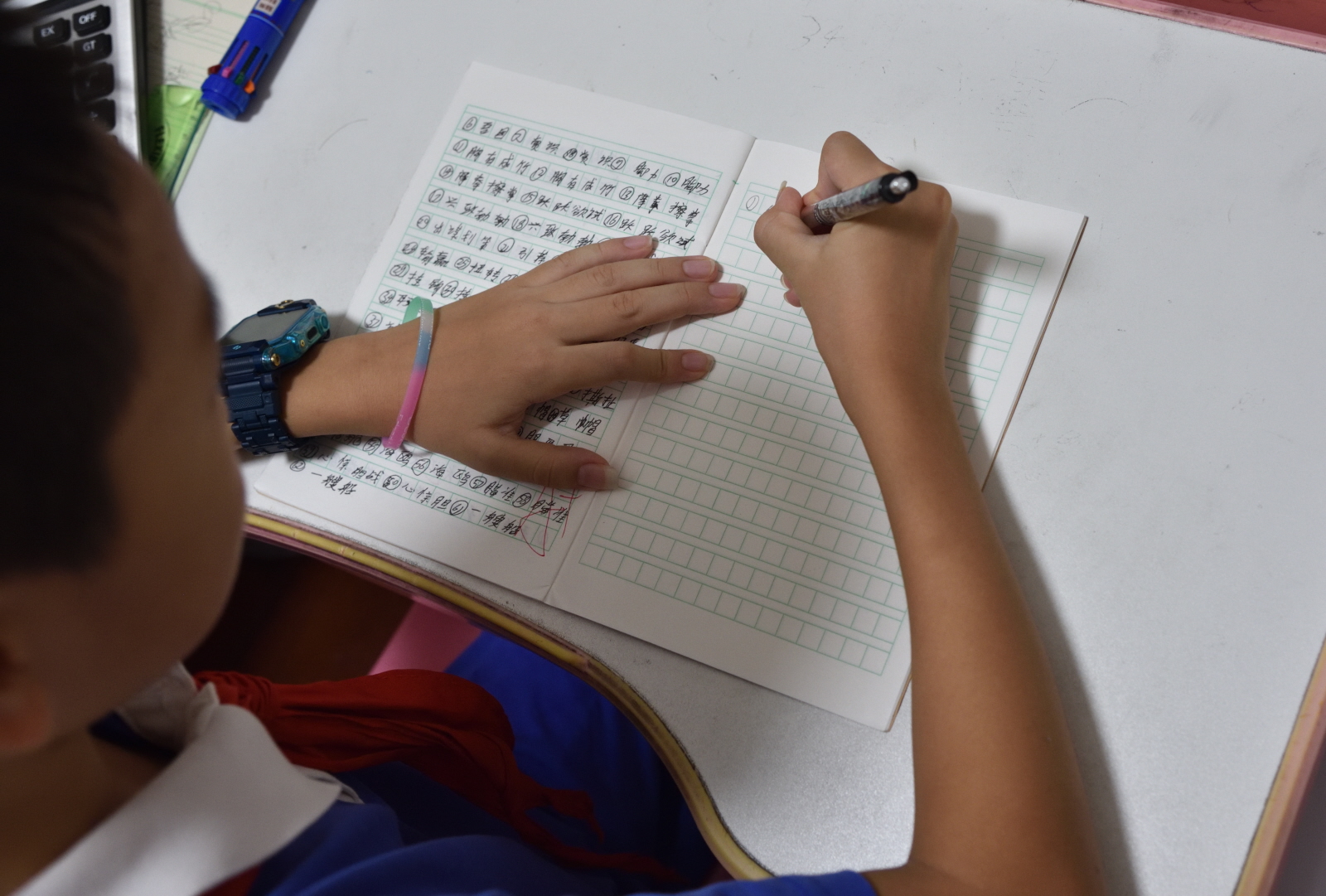
Lele doing homework late at night.
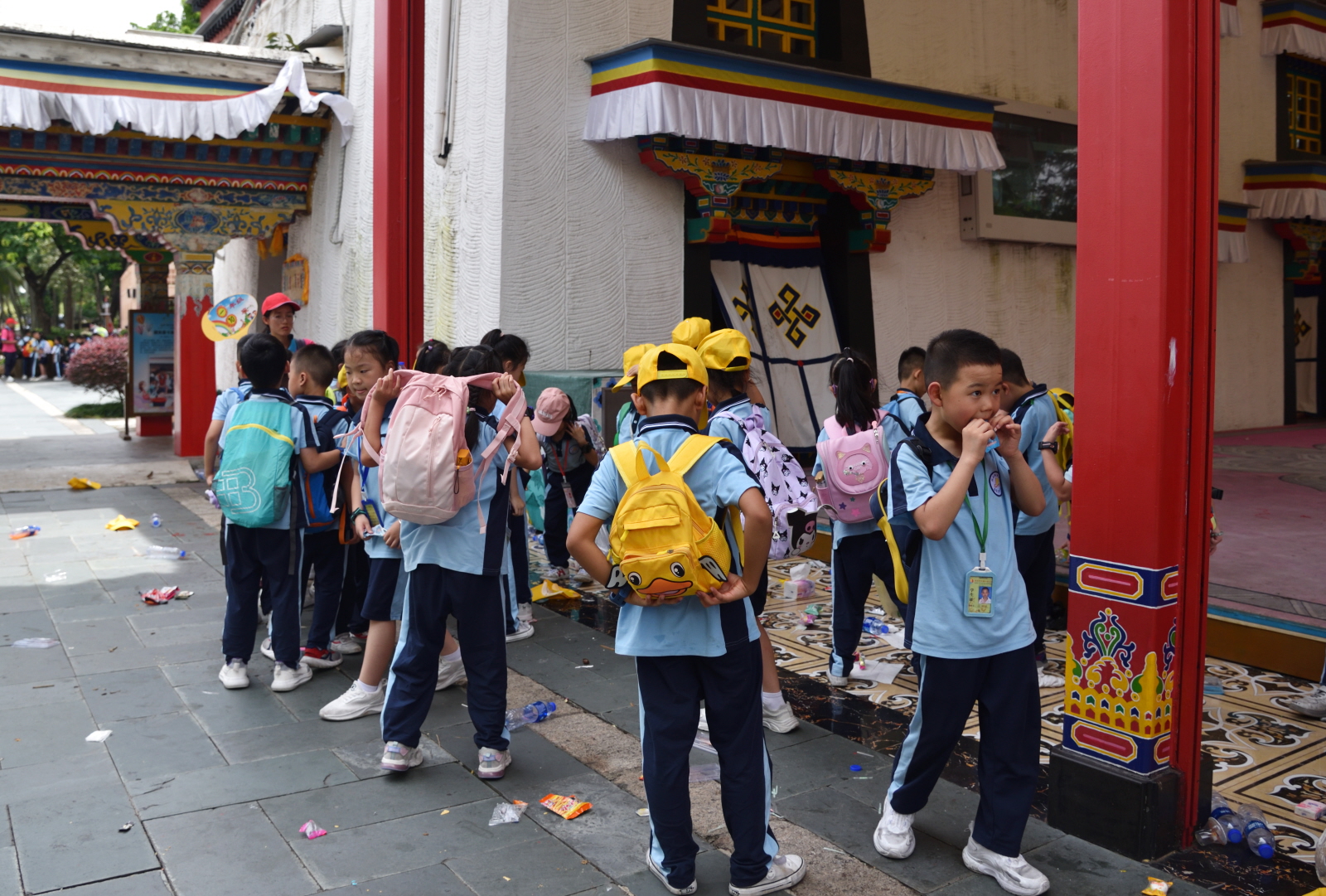
End of June — a little relaxation, a school trip to the Splendid China folk culture park in Shenzhen.
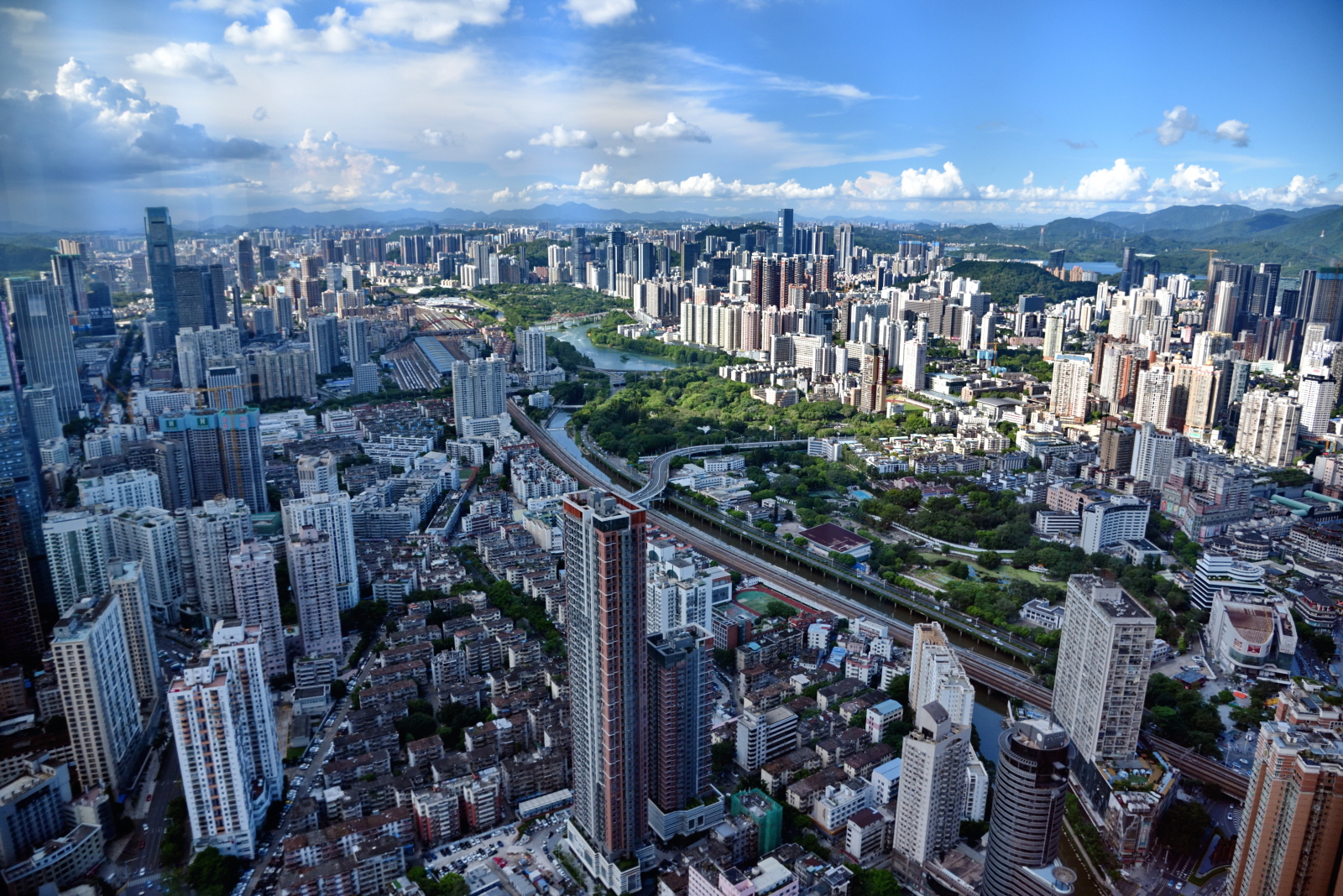
Shenzhen — in this huge metropolis, competition plays an important role, including competition among students.
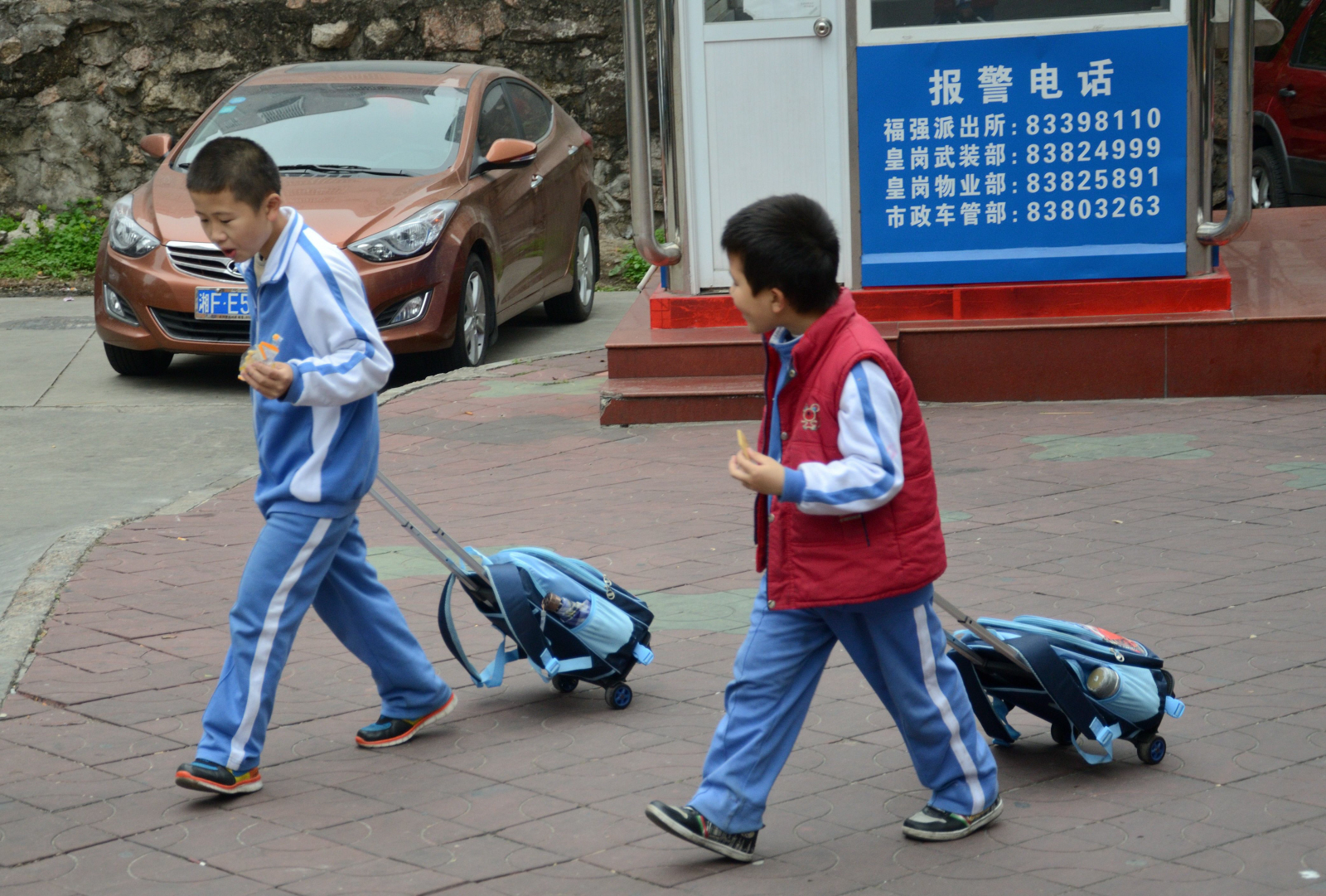
Lunch break — returning home.
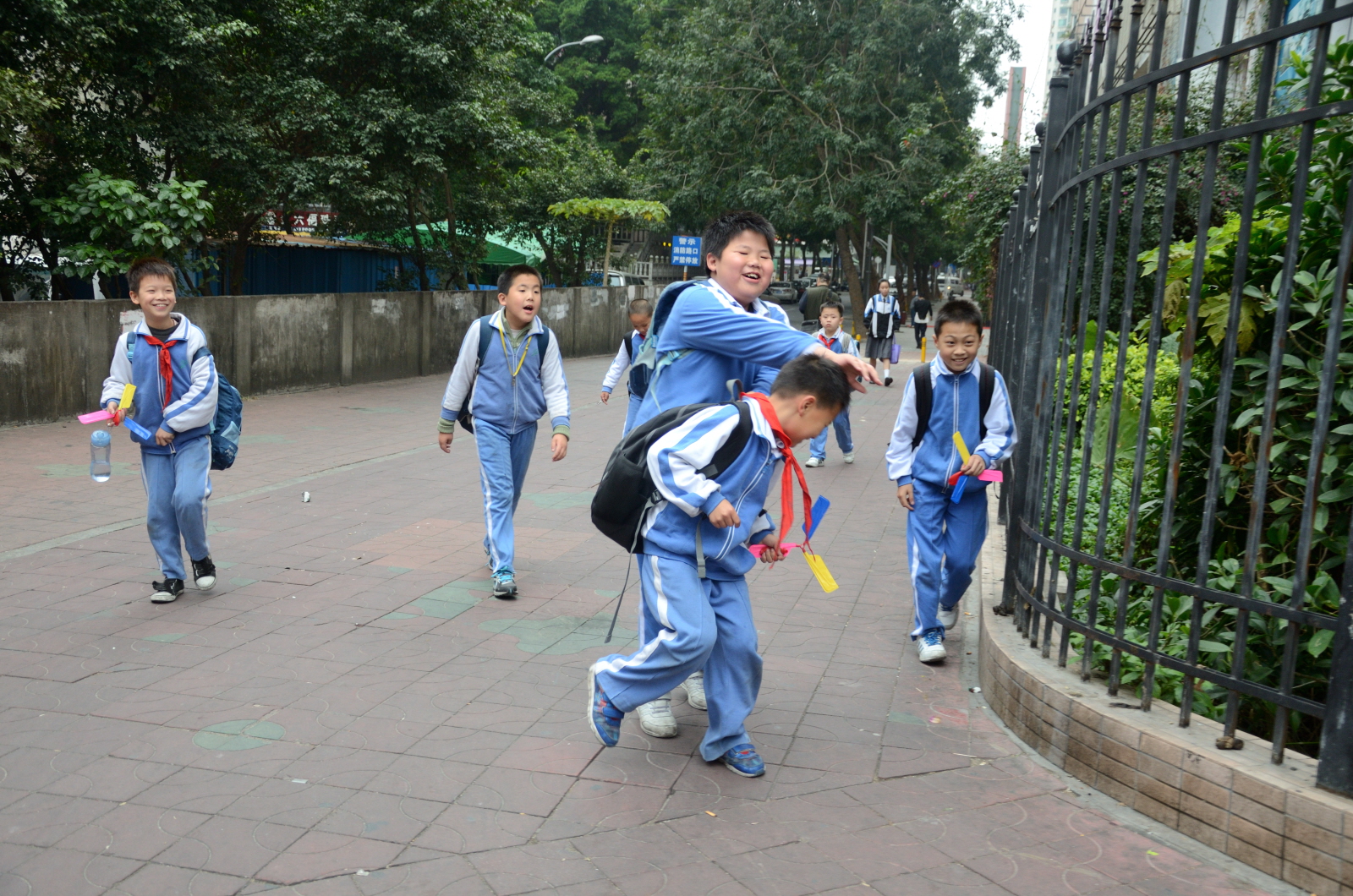
Classes finished for today? No, this is only a one-hour lunch break. Afterwards, students return to lessons.
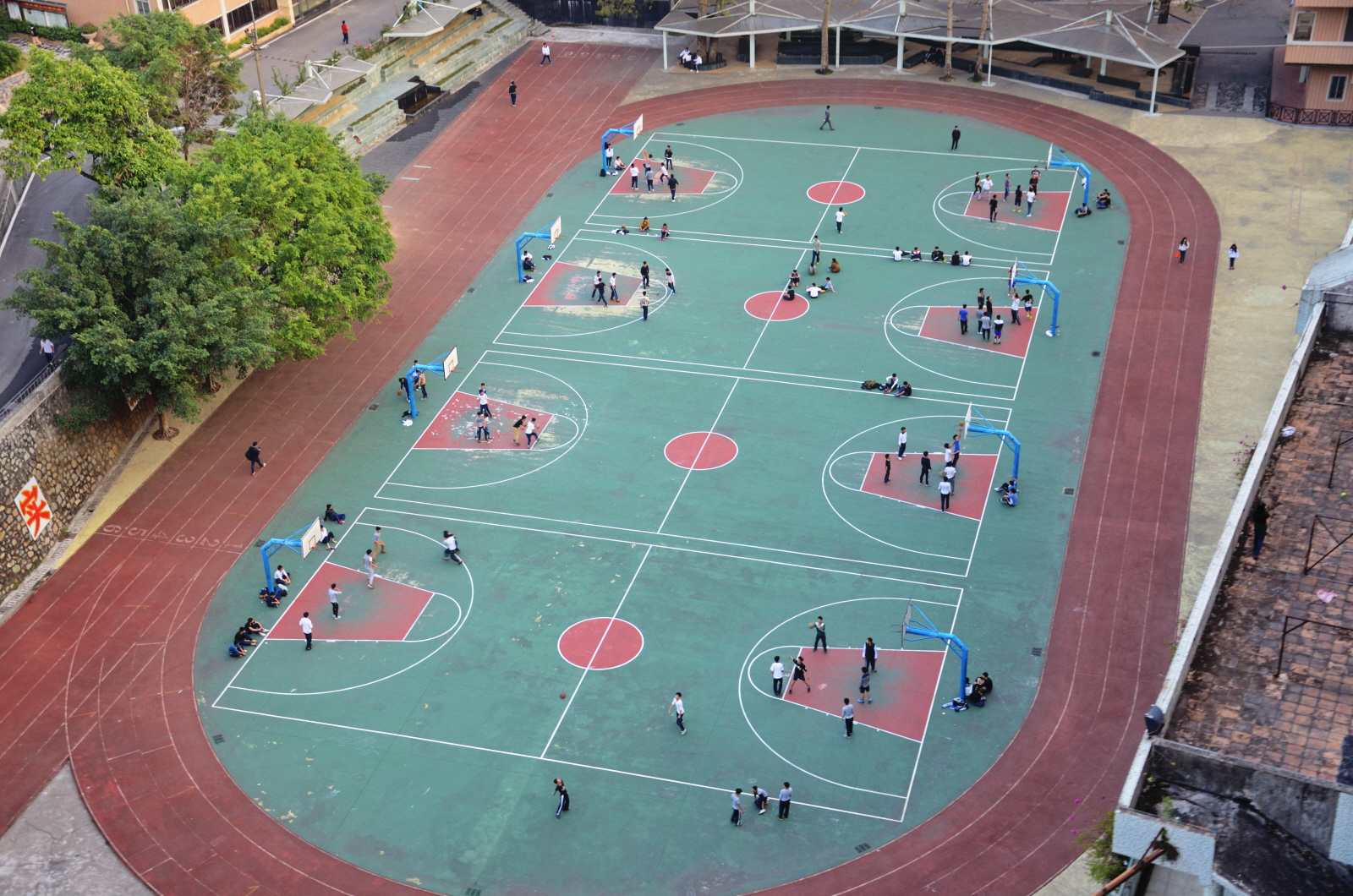
A large school sports field in Guangzhou.
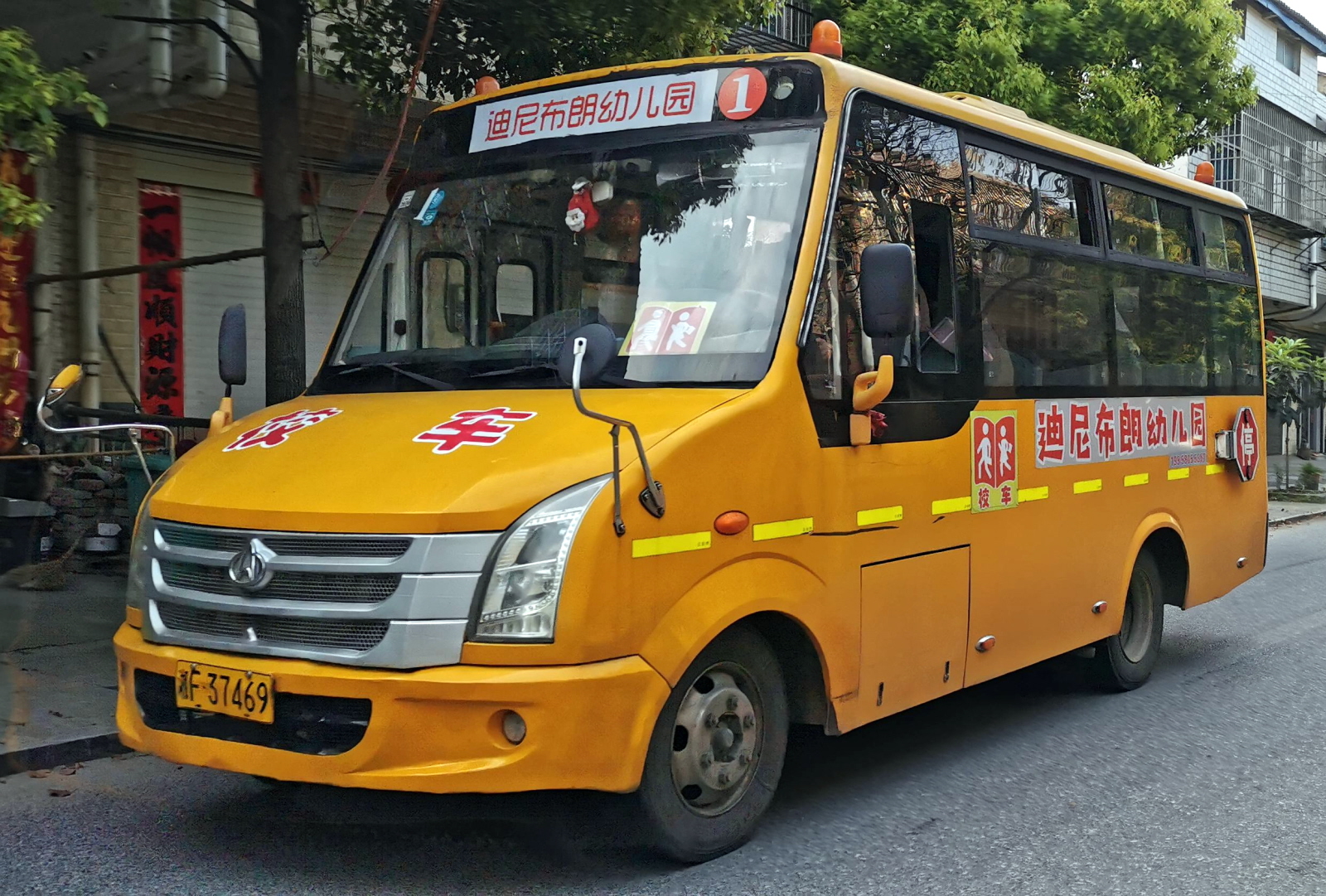
School bus for rural children, near the city of Yueyang, Hunan Province.
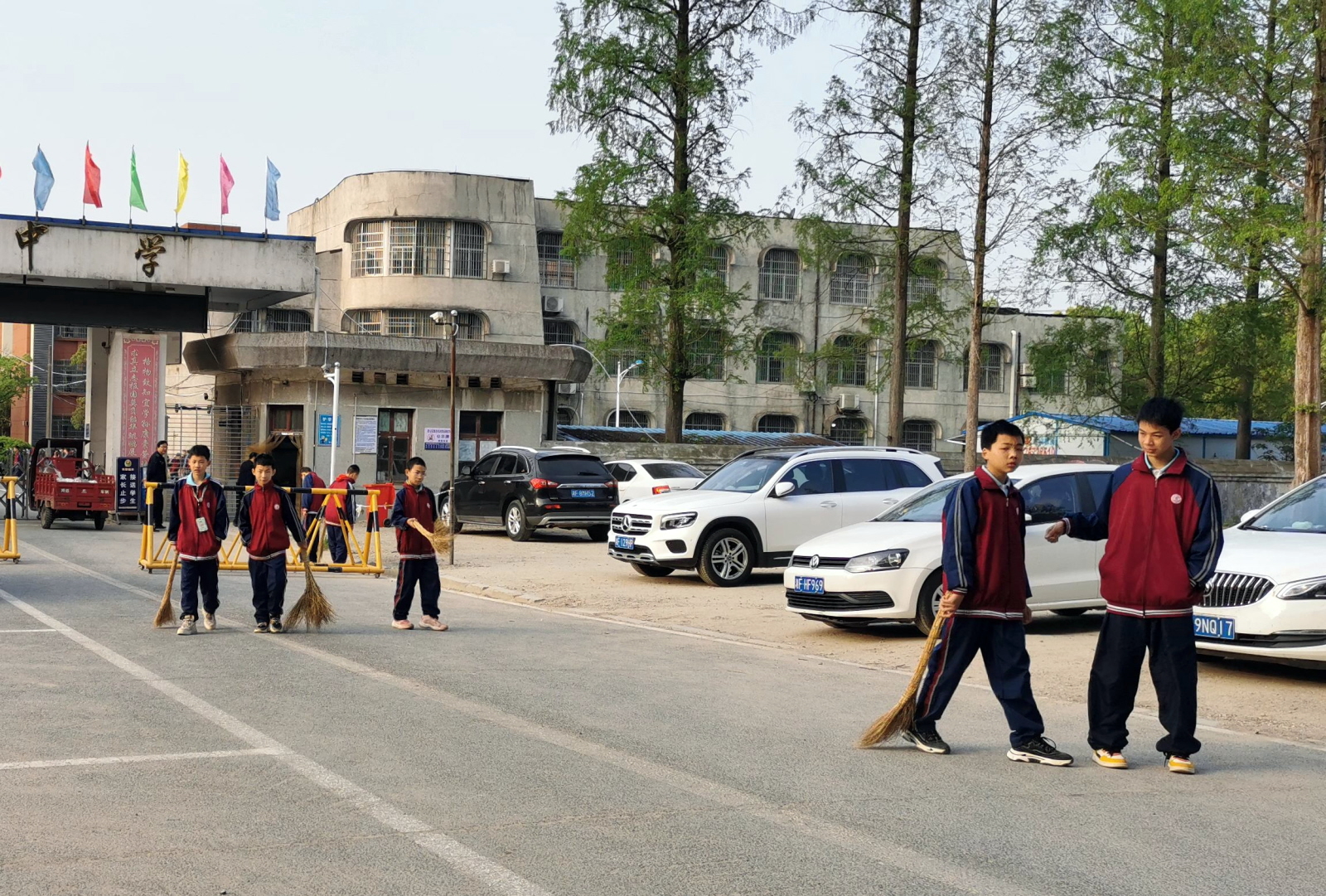
Morning routine — students clean the area in front of the school gate, Hunan Province.
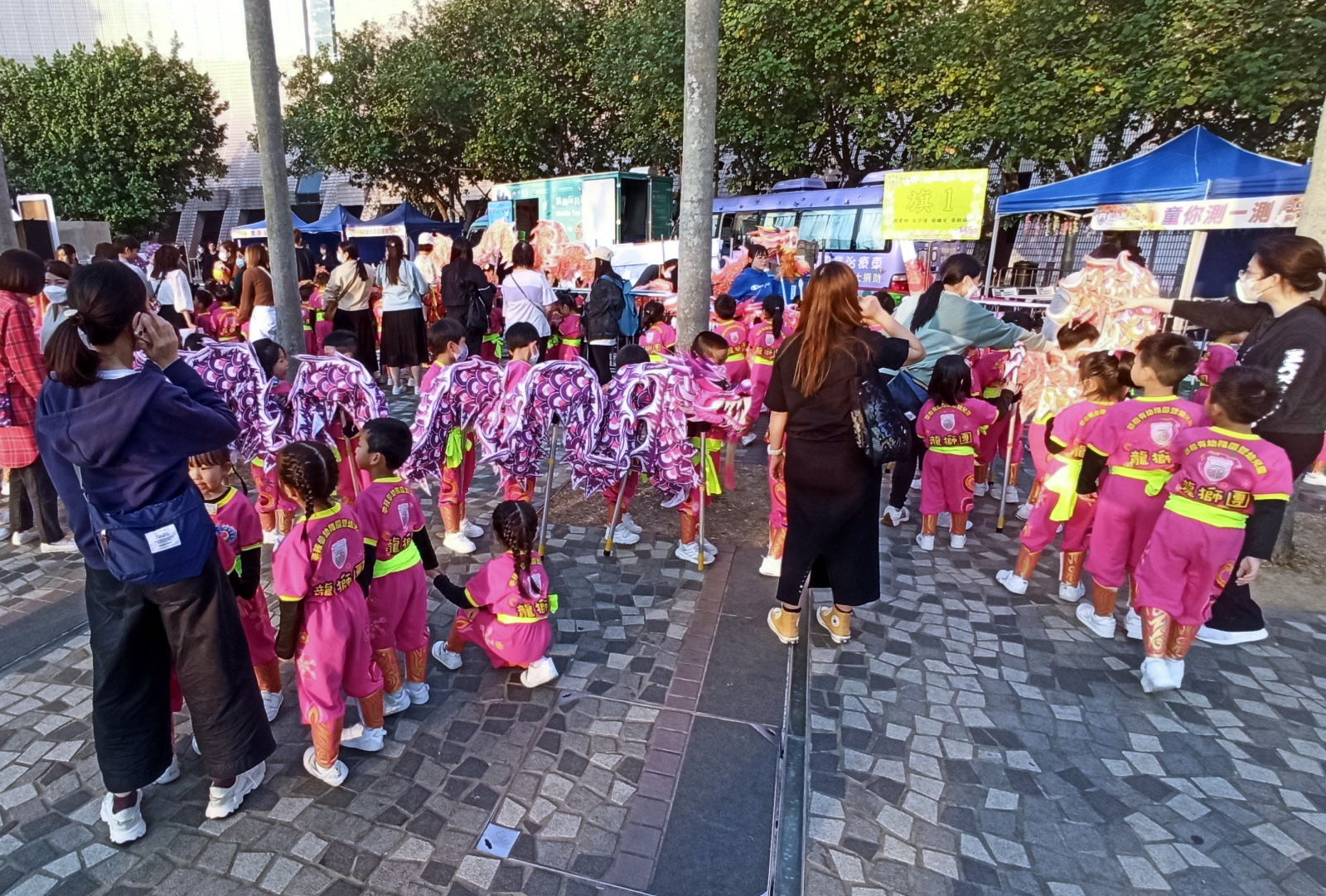
Kindergarten children in Hong Kong preparing for a dragon parade — Chinese New Year period.
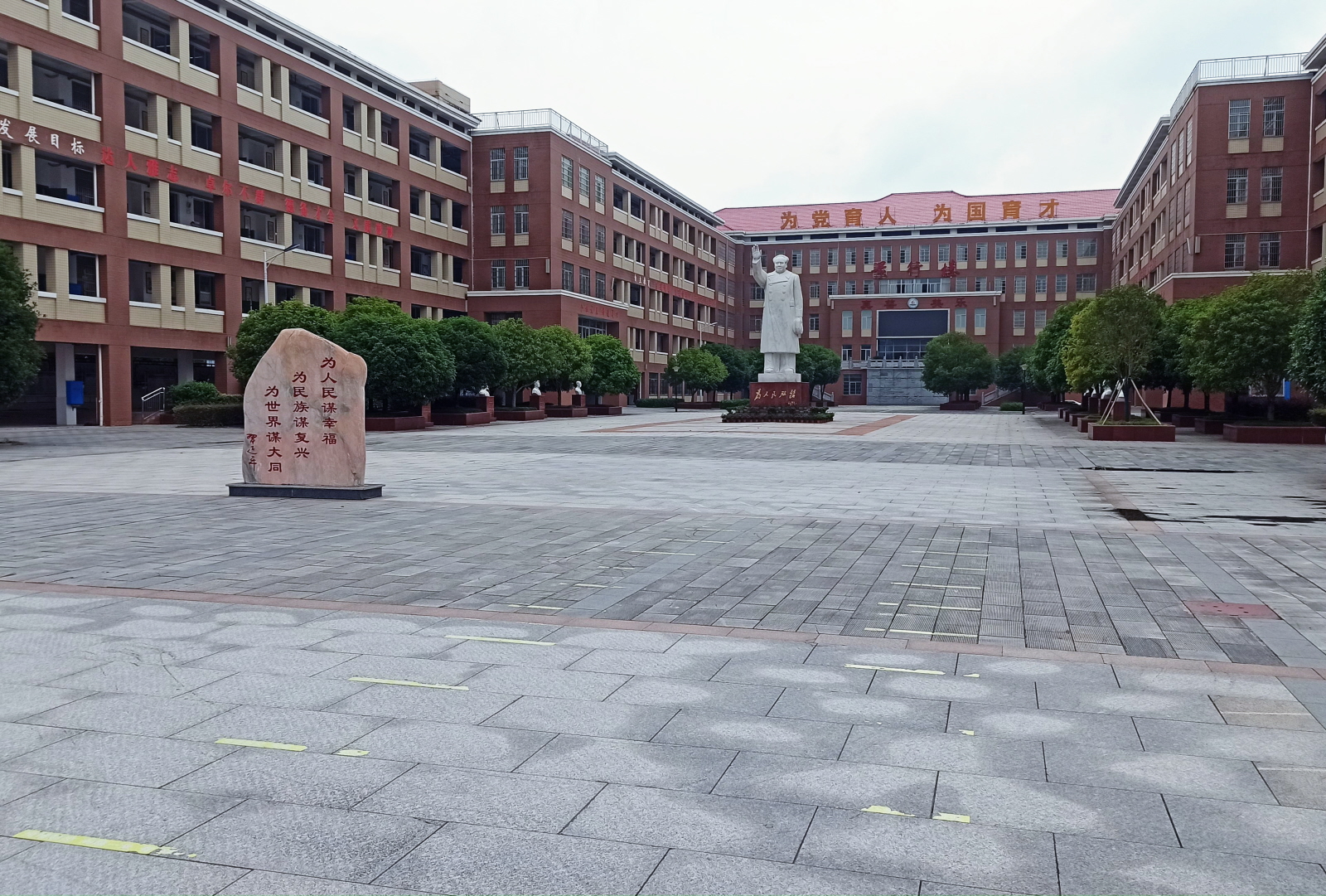
A modern "rural" school near Yueyang, Hunan Province.
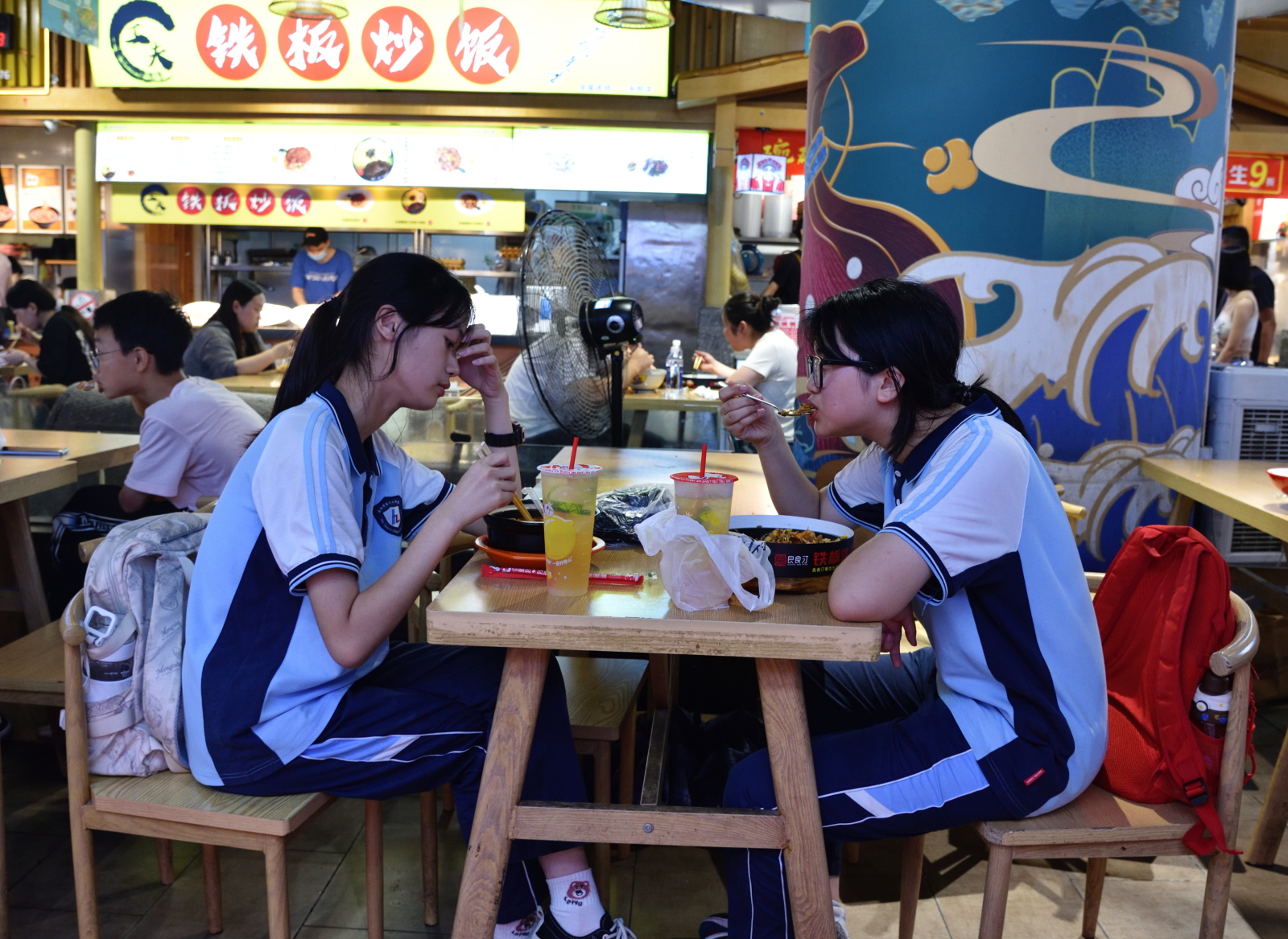
Lunch break — a moment of rest for young students.
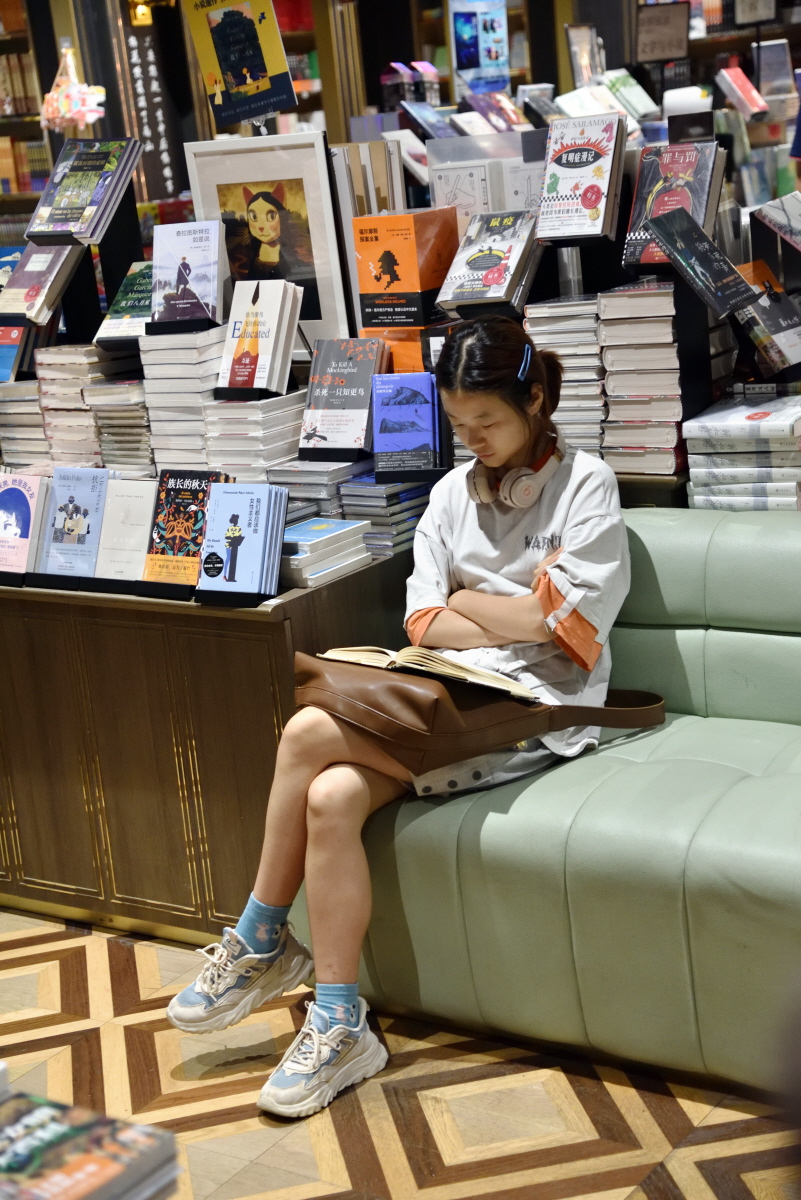
Free time during the weekend can be spent, for example... with a book.
If you are interested in quoting my words, or would like
to republish or print my texts, please contact me using the form below.
contact form.
Comment:
No comments to display.